This project explored how AI could turn complex operational workflows into simple conversations.
Company
Secret Escapes
Year
2025
Team
Product Manager
Two Engineers
Product Designer (me)
My role
Product framing, interaction design, and prototype
Overview
Exploring a conversational interface for complex internal tools
During a company Hack Day, we explored whether AI could simplify interaction with Tracy, one of our most complex internal systems. Building on an engineering prototype that connected Tracy to an LLM, I designed an interaction model that combines conversational input with structured UI patterns.
The goal was to test how AI could help operational teams complete common tasks faster while maintaining transparency and control.
Context & Challenge
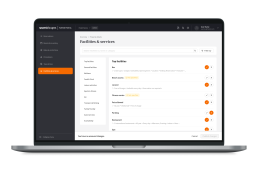
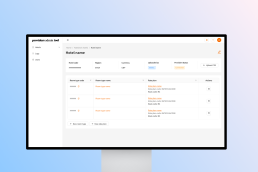
Tracy is a powerful internal platform used to manage bookings, deals, listings, and partner information. Because of its breadth, many workflows require navigating multiple screens and deep product knowledge.
The challenge was not whether AI could retrieve information, but how it should interact with users in a system where actions can affect pricing, inventory, and customer bookings.
The key design problem became:
How might AI reduce complexity while keeping users confident and in control?
Strategy & Decisions
Focus on real operational tasks
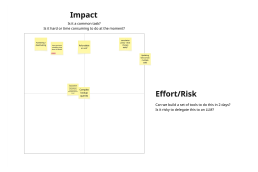
Rather than designing a generic chatbot, I worked with internal teams and super users to identify high-value workflows.
Hybrid interaction model
Pure chat interfaces create uncertainty in operational tools. Instead, I designed a hybrid model combining:
- Natural language inputs
- Suggested actions
- Structured response cards
- Confirmation steps before execution
This approach keeps the flexibility of AI while maintaining clarity.
Transparency before automation
To build trust, the assistant never performs actions silently. Every change is summarised before execution, giving users a clear opportunity to review and confirm. This principle became central to the interaction model.
Execution
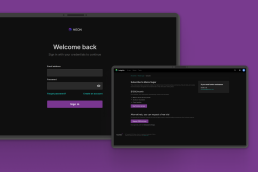
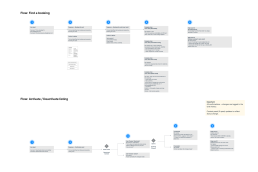
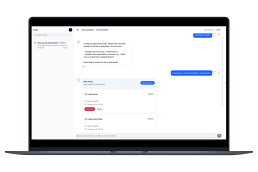
Using the identified workflows, I designed a conversational interface layered on top of Tracy. Users would be able to select a profile based on their role and then they could ask questions or trigger common actions through suggested prompts. The assistant would interpret the request and return structured responses, such as booking summaries or deal information.
For operational changes, the system presents a clear action summary before applying updates.
Key interface patterns explored included:
- Role-based task suggestions
- Response cards summarising system data
- Action chips guiding next steps
- Confirmation flows for sensitive actions
- Interaction history and logging
The work resulted in a mid-fidelity prototype demonstrating how AI could integrate into operational workflows rather than exist as a separate chatbot.
Outcomes
By introducing an AI-assisted interface, the concept explored how our operational workflows could be reduced to a single conversational interaction instead of navigating multiple system screens.
40%
faster completion of common operational tasks
3X Faster processes
Users can retrieve key operational data through a single query instead of navigating multiple modules.
Reduced cognitive load
Operational tasks that previously required deep system knowledge or focus become guided interactions.
Higher confidence
AI-generated actions are summarised before execution, keeping users in control and reducing the risk of errors.
Faster onboarding
A conversational interface lowers the learning curve of complex internal tools.